Showing posts with label #adventure. Show all posts

Friday, July 13, 2018

One Day at the Beach – And Some Great Museums in Saint Petersburg Florida

By Jeff Burns

The beaches of the Tampa Bay/Clearwater/Saint Petersburg area have drawn throngs of tourists for over a century, but there is much more to enjoy than just great beaches. History lovers have some great museums to visit too!

After a morning (or afternoon) at the beach in Saint Petersburg, visitors owe it to themselves to sample an iconic landmark for lunch or dinner.  Ted Peters Famous Smoked Fish has been open for more than 65 years, serving a relatively simple menu:  smoked fish (mullet, mackerel, salmon, mahi) and a couple of sides.  The fish is smoked for hours, in a tradition that is centuries old, going back to indigenous Floridians.  Be sure to order the smoked fish spread as an appetizer.


While in Saint Pete, you have to visit the newly opened (April 2018) James Museum of Western and Wildlife Art. Located in a beautifully remodeled parking garage downtown, it’s designed to look like sandstone cliffs from the outside.  On the inside, you will find 30,000 square feet of space displaying a portion – yes, a small portion at that – of a huge private collection of western and wildlife art. Most of the artists on display are still living, and they may not be as famous as Remington or Catlin, but it is an absolutely phenomenal collection, one of the most beautiful collections I’ve ever seen.  The James may well be the best western art museum in the world, or at least a close second to the Buffalo Bill Center in Cody Wyoming. (Educator discount for admission with ID.)

The Florida Holocaust Museum is also located in downtown Saint Pete. Of course, it is a difficult subject, but this museum does an excellent job of illustrating and educating about the Holocaust. We were fortunate to catch an incredible special exhibit about the capture and trial of Adolf Eichmann, considered the architect of the Final Solution. The museum also offers free traveling trunks for educators to use in their classrooms. (Educators admissions are free with school ID.)


Don’t forget to stop by the Saint Petersburg Museum of History to see local history, the role of baseball and aviation in the region and even a replica of King Tut’s Tomb. 

Tuesday, February 7, 2017

Charleston: Happy Historic House Hopping!

By Jeff Burns

Charleston South Carolina is full of history, wherever you look.  There is no shortage of historic homes that you can tour.  Sure, on Plantation Road, you can see several plantations, or the remains of plantations. However, I think the real treats are the houses in town.  For most of the plantation owners, plantation life was not suitable for entertaining and socializing, so most planters owned a townhouse as well.  Many of these houses have been carefully preserved, and they comprise a fascinating part of Charleston’s unique architectural history.

If visiting Charleston, your first stop has to be the Visitors Center. Knowledgeable, friendly people are there to answer any questions and to make recommendations, and you can purchase a Heritage Passport that you will need.  For one bargain price, you can get admission to most of the houses and numerous other sites. From the downtown visitors center, go across the street to the Charleston Museum, which bills itself as America’s oldest museum. There you can see Charleston’s story, the natural and cultural history of the South Carolina low country.

Nearby, the museum maintains two outstanding house museums: the Joseph Manigault House and the Heyward-Washington House. The Manigault House was built in 1803 by one of the wealthiest rice-planting families, and it is a terrific example of Federal-style architecture and furnishings. 


The Heyward –Washington House was built by a signer of the Declaration of Independence, and George Washington stayed there for a week during his presidency. It has another famous person connection, as well. It was the childhood home of Sarah Grimke.  Sarah and her sister Angelina were unique in American history.  Born to a prominent slave-owning family, the sisters became two of the most famous abolitionists and women’s rights advocates of their day.


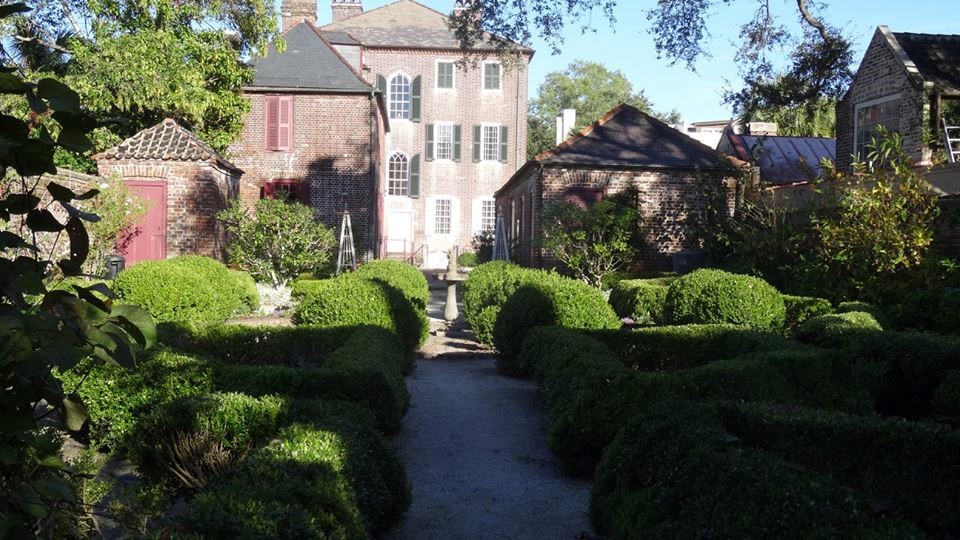
Garden and rear 

I wrote about the Aiken Rhett House in another blog, as an example of preservation instead of restoration
.  The goal  is to show the original house as much as possible. It was built around 1820 and passed down through family members for 145 years.  One of the most interesting aspects of this house tour is the life of the urban slaves who worked here.  The two prominent outbuildings are the kitchen/laundry and the stables/carriage house.  Twelve or fifteen slaves lived and toiled here.


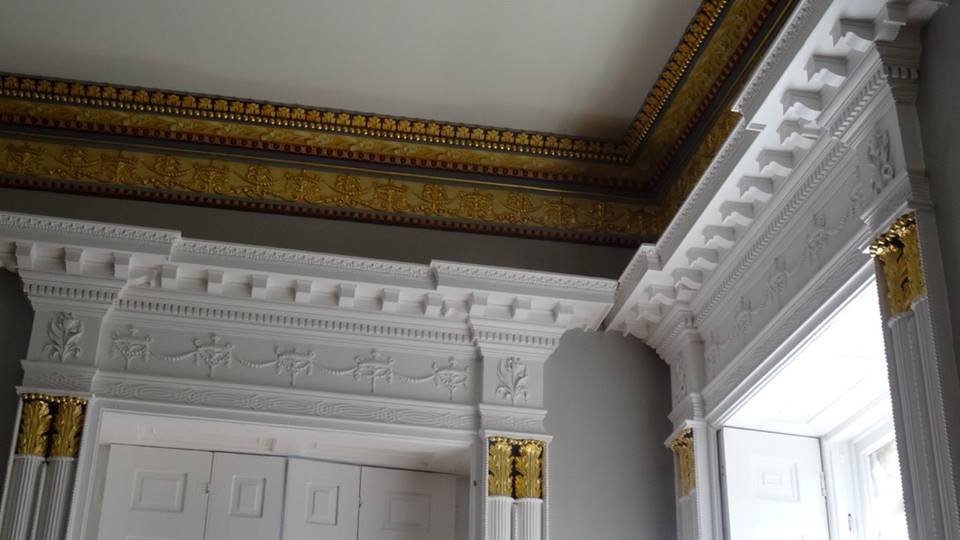
At the opposite end of the spectrum is the Nathaniel Russell House, built in the late 1700s by one of the wealthiest planters and merchants in Charleston. It is beautifully restored to the state of luxury and grandeur that one of America’s wealthiest families of the 18th century enjoyed.


These are just a few of the impressive house museums open to you when you visit Charleston.  Don’t miss them!

Wednesday, November 2, 2016

Day (Or 2 Or 3) Trip: Cody, Wyoming

By Jeff Burns

Cody Wyoming was named for its founder, Buffalo Bill Cody, the scout, hunter, and Wild West Show creator.  Located about an hour from Yellowstone National Park, Cody is full of great attractions.

Whether you stay there or not, you have to visit the Hotel Irma, built by Buffalo Bill Cody and named for his daughter.  The rooms are quaint and old-fashioned, but a little pricey. Have a meal in the restaurant and then walk around the lobby and gift shop.  Every evening during the summer, the street in front of the hotel is closed off for a Wild West shootout show. 


The biggest attraction in Cody is the Buffalo Bill Center of the West, sometimes called the “Smithsonian of the West.” It’s actually five museums in one, and you could spend a couple or three days exploring the Center alone.  The museums are the Draper Museum of Natural History, the Plains Indian Museum, the Cody Firearms Museum, the Whitney Western Art Museum, and the Buffalo Bill Museum dedicated to the life of the showman.


Every third weekend of June, the Center hosts an annual Plains Indian Powwow, which brings tribal dancers and Native American artisans from throughout the West to the performance area next door to the Center. It is a fantastic experience, an auditory and visual spectacle that will stay with you for a long time. Word of Advice:  Book your hotel early if you plan to be in town for the powwow, at least 6 months in advance.  Rooms fill fast.


For a taste of the Old West, visit Old Trail Town, a collection of cabins and buildings from the area that have been set up for visitors.  The cabins include cabins belonging to Curly, one of the Crow Indian scouts with Custer at Little Bighorn, and Jeremiah “Liver-eating” Johnson, the real life mountain man portrayed in the 1972 film Jeremiah Johnson by Robert Redford. You can also explore a cabin and saloon occupied and patronized by Butch Cassidy and the Sundance Kid. Johnson is one of several notables buried at Old Trail Town, along with Buffalo Bill himself.


About twenty minutes from Cody, you can find the Heart Mountain Relocation Center, one of 10 internment camps built during World War II for thousands of Japanese-Americans forced from their homes on the West Coast following the attack on Pearl Harbor.  Not much remains of the original structures of the camp, but the Interpretive Center is excellent.  This was one of the darkest moments in American history, and the Heart Mountain complex does a great job of telling this painful story.


It is Wyoming, so summertime is rodeo time in Cody.  There’s an amateur rodeo every night from June through August, and a big professional rodeo is in town the first week of July. In town, there are neat shops and restaurants.  Cody offers a lot to keep you occupied.


Monday, October 10, 2016

Day Trip: Thermopolis, Wyoming

By Jeff Burns

Thermopolis Wyoming is the county seat of Hot Springs County, with a population around 3,000.  The name Thermopolis is Greek for “Hot City”, in reference to the numerous hot springs which have drawn tourists to the area since the 19th century.


The Hot Springs State Park is located in Thermopolis, and you can bathe in thermal mineral pools, with a temperature around 104 degrees (F), for free.  There are also two water concessions in the park, Teepee Pools and Star Plunge, where you can pay to enjoy water slides and other pool fun.  Once out of the pool, be sure to drive around the park and see the Wyoming state buffalo herd.


The Hot Springs County Museum is a must-see, with a great collection of artifacts from the 19th and early 20th century.  One great exhibit consists of a simulated raised wooden sidewalk that takes you down a street of the Old West, allowing you to see inside the storefronts.  Across the street, there are several buildings housing special collections, including an old schoolhouse and a caboose.


Interested in ancient history? Technically, pre-history?  East Thermopolis is home to the Wyoming Dinosaur Center.  Wyoming is rich in fossils of all kinds, and the museum proudly displays many Wyoming finds, as well as specimens from around the world.  You can see the only Archaeopteryx fossil in North America, and you can even go out to an active dig site.

Enjoy a day in Thermopolis, one of the few you places you can relax in a mineral spring and learn about millions of years of history.


Wednesday, September 21, 2016

Day Trip: Billings, Montana

By Jeff Burns

What is there to do in Billings? There are actually a lot of great things to do for a history buff. At about 160,000 in population, Billings is the largest city in Montana and was founded as a railroad town in 1882. However, its history goes back many years before that. Lewis and Clark passed through the area and even named a nearby rock formation Pompey’s Rock, after Sacajawea’s son.  The area has been  occupied by Native Americans for thousands of years, and there are sites near the city that preserve ancient petroglyphs, evidence of their occupation.

During its early days, Billings was a rough and tumble town of the old west, where cowboys, miners, and railroaders blew off steam in saloons and brothels.  The museums of Billings do a great job of telling the story of those eras, prehistoric and bawdy, along with the stories of the homesteaders and ranchers who eventually tamed the west.


We started our visit at the Western Heritage Cultural Center, located in a turn of the 20th century library building.  It’s a good introduction to the area.  Its rotating exhibits cover the natural history and cultural history of the region.  It also serves as the repository of a great collection of Native American oral histories.


From there, it’s a few blocks to the Moss Mansion, built in 1903 by P.V. Moss, a businessman who basically owned Billings.  He had huge a range of money-making interests including mining, railroads, agriculture, and electricity. The mansion now belongs to the city of Billings, and it is preserved as the Moss family lived in it, furnished with their belongings. It is one of the most elaborate and well-preserved house museums I’ve ever visited.  As far as luxury goes, the Moss Mansion is much more luxurious than many would picture in the Old West.


If you fly into Billings, you don’t have to go far to see a great museum.  The Yellowstone County Museum is on the airport property.  Don’t be fooled by the small log cabin you see on the perimeter road.  There is much more to see below.  There are hundreds and hundreds of Indian artifacts as well as an exhibit on one of Billings’ famous residents Calamity Jane, but don’t forget to say hi to the two-headed calf.

In downtown Billings, there are a couple of great stores to explore.  One is Native American Nations.  There you will find a great assortment of Native American crafts and artifacts, and the selection and prices are both much better than any trading posts in the area.  Be prepared to move into the Yesteryears Antique Mall.  It is huge, and there is definitely something for you there.  If you’re really into vintage clothing, check out the Montana Vintage Clothing store, practically next door to Yesteryear.


Wednesday, August 10, 2016

Day Trip: Biloxi

By Jeff Burns

Biloxi Mississippi was founded in 1699 by the French when Pierre Le Moyne d’Iberville established Fort Maurepas in what is now Ocean Springs.  It was the capital of French Louisiana for a couple of decades before the capital was moved to New Orleans.  In the late 1800s it became a beach resort town with cottages, mansions and hotels facing the Gulf of Mexico and frequented by the rich and famous. At the same time, it became the center of a huge seafood production industry, supplying the world with fish, shrimp, and oysters. Today, it’s a relatively low-key city of less than 50,000 situated on a beautiful 26 mile long stretch of man-made beach, and its downtown is dominated by casinos. For a history lover, there are a few things that might draw you off the beach – or out of the casino -  temporarily.


The area was devastated by Hurricane Katrina, and you can still see the effects and the rebuilding.  There are several exhibits focusing on the storm and its aftermath, which most of us were little aware of at the time, because all of the media attention was focused on New Orleans, and the Mississippi Gulf Coast was largely ignored.  As you drive along the beach, you can see empty lots, and, along US Highway 90, be sure to look for the tree stumps and trunks that have been carved into beautiful birds and animals by the artist Marlin Miller.

Start your visit at the Biloxi Visitors Center. The staffers are very friendly, enthusiastic, and helpful. The exhibits are informative, and you can step out from there directly to the pier, lighthouse, and beach.

A few miles down the road is Beauvoir, the last home of former Confederate President Jefferson Davis.  Built in the 1850s as a summer home for another planter, Davis and his family became the owners in 1879. Now it is operated by the Sons of Confederate Veterans. You can tour the house and see it as it was when the Davises lived there.  There is also a museum and a Confederate cemetery on the property.  The property and collections suffered greatly during Hurricane Katrina, and rehabilitation work is still being done. The museum has a small but interesting collection.  Be sure to watch the Jefferson Davis Documentary. The segment that is shown is very informative, focusing on his post-war life.  You really get an understanding of how complex the man and his role in American history were and are.  Visiting Beauvoir has definitely stoked an interest  in myself to learn more.


Next stop is the Ohr-O’Keefe Museum, an architecturally stunning campus designed by renowned architect Frank Gehry, a native of the region, to celebrate the ceramic and pottery art of George Ohr, the self-described “mad potter of Biloxi”, who worked in the late 1800s.  His genius was unrecognized during his life, despite his attempts at self-promotion.  He was just too far ahead of his time.  Fortunately, his family preserved and packed away his work, and a New York art dealer discovered it and introduced it to the world.

At the museum, you can see his work and interesting temporary exhibits as well.  It is a great place.  The docents are incredibly friendly, enthusiastic, and informative.  Katrina also had a major impact here, and they have mounted a special exhibit to document it. You can get a glimpse of the work here.


I must admit that I was reluctant to visit the last museum of the day, the Maritime and Seafood Industry Museum, but I’m glad I did.  True, the boats and artifacts didn’t hold much interest for me, but I was fascinated by the videos and stories of the people of Biloxi telling their stories of working in the seafood industry.  Lewis Hine, a Progressive photographer, documented the child labor in the early 20th century, and you can watch videos of the people themselves recounting their lives.  Can you imagine, as a child, reporting to work at a seafood factory at 4 AM, peeing shrimp or shucking oysters until school time, going to school, and then going back to work after school until 6 or 7 PM?  And being paid a nickel for each 15 pounds or so of shrimp or oysters?  Stories like these really make me think that there are few in America today who have a right to complain about anything.


You can see all of these things and still make it to the beach. Have a great day in Biloxi!