Showing posts with label #Roadtrip. Show all posts

Wednesday, November 2, 2016

Day (Or 2 Or 3) Trip: Cody, Wyoming

By Jeff Burns

Cody Wyoming was named for its founder, Buffalo Bill Cody, the scout, hunter, and Wild West Show creator.  Located about an hour from Yellowstone National Park, Cody is full of great attractions.

Whether you stay there or not, you have to visit the Hotel Irma, built by Buffalo Bill Cody and named for his daughter.  The rooms are quaint and old-fashioned, but a little pricey. Have a meal in the restaurant and then walk around the lobby and gift shop.  Every evening during the summer, the street in front of the hotel is closed off for a Wild West shootout show. 


The biggest attraction in Cody is the Buffalo Bill Center of the West, sometimes called the “Smithsonian of the West.” It’s actually five museums in one, and you could spend a couple or three days exploring the Center alone.  The museums are the Draper Museum of Natural History, the Plains Indian Museum, the Cody Firearms Museum, the Whitney Western Art Museum, and the Buffalo Bill Museum dedicated to the life of the showman.


Every third weekend of June, the Center hosts an annual Plains Indian Powwow, which brings tribal dancers and Native American artisans from throughout the West to the performance area next door to the Center. It is a fantastic experience, an auditory and visual spectacle that will stay with you for a long time. Word of Advice:  Book your hotel early if you plan to be in town for the powwow, at least 6 months in advance.  Rooms fill fast.


For a taste of the Old West, visit Old Trail Town, a collection of cabins and buildings from the area that have been set up for visitors.  The cabins include cabins belonging to Curly, one of the Crow Indian scouts with Custer at Little Bighorn, and Jeremiah “Liver-eating” Johnson, the real life mountain man portrayed in the 1972 film Jeremiah Johnson by Robert Redford. You can also explore a cabin and saloon occupied and patronized by Butch Cassidy and the Sundance Kid. Johnson is one of several notables buried at Old Trail Town, along with Buffalo Bill himself.


About twenty minutes from Cody, you can find the Heart Mountain Relocation Center, one of 10 internment camps built during World War II for thousands of Japanese-Americans forced from their homes on the West Coast following the attack on Pearl Harbor.  Not much remains of the original structures of the camp, but the Interpretive Center is excellent.  This was one of the darkest moments in American history, and the Heart Mountain complex does a great job of telling this painful story.


It is Wyoming, so summertime is rodeo time in Cody.  There’s an amateur rodeo every night from June through August, and a big professional rodeo is in town the first week of July. In town, there are neat shops and restaurants.  Cody offers a lot to keep you occupied.


Monday, October 10, 2016

Day Trip: Thermopolis, Wyoming

By Jeff Burns

Thermopolis Wyoming is the county seat of Hot Springs County, with a population around 3,000.  The name Thermopolis is Greek for “Hot City”, in reference to the numerous hot springs which have drawn tourists to the area since the 19th century.


The Hot Springs State Park is located in Thermopolis, and you can bathe in thermal mineral pools, with a temperature around 104 degrees (F), for free.  There are also two water concessions in the park, Teepee Pools and Star Plunge, where you can pay to enjoy water slides and other pool fun.  Once out of the pool, be sure to drive around the park and see the Wyoming state buffalo herd.


The Hot Springs County Museum is a must-see, with a great collection of artifacts from the 19th and early 20th century.  One great exhibit consists of a simulated raised wooden sidewalk that takes you down a street of the Old West, allowing you to see inside the storefronts.  Across the street, there are several buildings housing special collections, including an old schoolhouse and a caboose.


Interested in ancient history? Technically, pre-history?  East Thermopolis is home to the Wyoming Dinosaur Center.  Wyoming is rich in fossils of all kinds, and the museum proudly displays many Wyoming finds, as well as specimens from around the world.  You can see the only Archaeopteryx fossil in North America, and you can even go out to an active dig site.

Enjoy a day in Thermopolis, one of the few you places you can relax in a mineral spring and learn about millions of years of history.


Wednesday, September 21, 2016

Day Trip: Billings, Montana

By Jeff Burns

What is there to do in Billings? There are actually a lot of great things to do for a history buff. At about 160,000 in population, Billings is the largest city in Montana and was founded as a railroad town in 1882. However, its history goes back many years before that. Lewis and Clark passed through the area and even named a nearby rock formation Pompey’s Rock, after Sacajawea’s son.  The area has been  occupied by Native Americans for thousands of years, and there are sites near the city that preserve ancient petroglyphs, evidence of their occupation.

During its early days, Billings was a rough and tumble town of the old west, where cowboys, miners, and railroaders blew off steam in saloons and brothels.  The museums of Billings do a great job of telling the story of those eras, prehistoric and bawdy, along with the stories of the homesteaders and ranchers who eventually tamed the west.


We started our visit at the Western Heritage Cultural Center, located in a turn of the 20th century library building.  It’s a good introduction to the area.  Its rotating exhibits cover the natural history and cultural history of the region.  It also serves as the repository of a great collection of Native American oral histories.


From there, it’s a few blocks to the Moss Mansion, built in 1903 by P.V. Moss, a businessman who basically owned Billings.  He had huge a range of money-making interests including mining, railroads, agriculture, and electricity. The mansion now belongs to the city of Billings, and it is preserved as the Moss family lived in it, furnished with their belongings. It is one of the most elaborate and well-preserved house museums I’ve ever visited.  As far as luxury goes, the Moss Mansion is much more luxurious than many would picture in the Old West.


If you fly into Billings, you don’t have to go far to see a great museum.  The Yellowstone County Museum is on the airport property.  Don’t be fooled by the small log cabin you see on the perimeter road.  There is much more to see below.  There are hundreds and hundreds of Indian artifacts as well as an exhibit on one of Billings’ famous residents Calamity Jane, but don’t forget to say hi to the two-headed calf.

In downtown Billings, there are a couple of great stores to explore.  One is Native American Nations.  There you will find a great assortment of Native American crafts and artifacts, and the selection and prices are both much better than any trading posts in the area.  Be prepared to move into the Yesteryears Antique Mall.  It is huge, and there is definitely something for you there.  If you’re really into vintage clothing, check out the Montana Vintage Clothing store, practically next door to Yesteryear.


Wednesday, August 10, 2016

Day Trip: Biloxi

By Jeff Burns

Biloxi Mississippi was founded in 1699 by the French when Pierre Le Moyne d’Iberville established Fort Maurepas in what is now Ocean Springs.  It was the capital of French Louisiana for a couple of decades before the capital was moved to New Orleans.  In the late 1800s it became a beach resort town with cottages, mansions and hotels facing the Gulf of Mexico and frequented by the rich and famous. At the same time, it became the center of a huge seafood production industry, supplying the world with fish, shrimp, and oysters. Today, it’s a relatively low-key city of less than 50,000 situated on a beautiful 26 mile long stretch of man-made beach, and its downtown is dominated by casinos. For a history lover, there are a few things that might draw you off the beach – or out of the casino -  temporarily.


The area was devastated by Hurricane Katrina, and you can still see the effects and the rebuilding.  There are several exhibits focusing on the storm and its aftermath, which most of us were little aware of at the time, because all of the media attention was focused on New Orleans, and the Mississippi Gulf Coast was largely ignored.  As you drive along the beach, you can see empty lots, and, along US Highway 90, be sure to look for the tree stumps and trunks that have been carved into beautiful birds and animals by the artist Marlin Miller.

Start your visit at the Biloxi Visitors Center. The staffers are very friendly, enthusiastic, and helpful. The exhibits are informative, and you can step out from there directly to the pier, lighthouse, and beach.

A few miles down the road is Beauvoir, the last home of former Confederate President Jefferson Davis.  Built in the 1850s as a summer home for another planter, Davis and his family became the owners in 1879. Now it is operated by the Sons of Confederate Veterans. You can tour the house and see it as it was when the Davises lived there.  There is also a museum and a Confederate cemetery on the property.  The property and collections suffered greatly during Hurricane Katrina, and rehabilitation work is still being done. The museum has a small but interesting collection.  Be sure to watch the Jefferson Davis Documentary. The segment that is shown is very informative, focusing on his post-war life.  You really get an understanding of how complex the man and his role in American history were and are.  Visiting Beauvoir has definitely stoked an interest  in myself to learn more.


Next stop is the Ohr-O’Keefe Museum, an architecturally stunning campus designed by renowned architect Frank Gehry, a native of the region, to celebrate the ceramic and pottery art of George Ohr, the self-described “mad potter of Biloxi”, who worked in the late 1800s.  His genius was unrecognized during his life, despite his attempts at self-promotion.  He was just too far ahead of his time.  Fortunately, his family preserved and packed away his work, and a New York art dealer discovered it and introduced it to the world.

At the museum, you can see his work and interesting temporary exhibits as well.  It is a great place.  The docents are incredibly friendly, enthusiastic, and informative.  Katrina also had a major impact here, and they have mounted a special exhibit to document it. You can get a glimpse of the work here.


I must admit that I was reluctant to visit the last museum of the day, the Maritime and Seafood Industry Museum, but I’m glad I did.  True, the boats and artifacts didn’t hold much interest for me, but I was fascinated by the videos and stories of the people of Biloxi telling their stories of working in the seafood industry.  Lewis Hine, a Progressive photographer, documented the child labor in the early 20th century, and you can watch videos of the people themselves recounting their lives.  Can you imagine, as a child, reporting to work at a seafood factory at 4 AM, peeing shrimp or shucking oysters until school time, going to school, and then going back to work after school until 6 or 7 PM?  And being paid a nickel for each 15 pounds or so of shrimp or oysters?  Stories like these really make me think that there are few in America today who have a right to complain about anything.


You can see all of these things and still make it to the beach. Have a great day in Biloxi!


Monday, July 11, 2016

Ocean Springs Mississippi

By Jeff Burns


French Louisiana started in 1699 when Pierre Le Moyne D’Iberville established Fort Maurepas on the Gulf Coast.  Fort Maurepas became Old Biloxi and New Biloxi soon became the capital of French Louisiana for a couple of decades before the capital was moved to New Orleans.  Fort Maurepas eventually became the town of Ocean Springs.  Look up Ocean Springs, and the word “quaint” is probably not too far removed. Ocean Springs became a resort town, with a great shopping district of small shops, and an artists’ colony with artists setting up shop and practicing painting, sculpting, and ceramics and pottery. Today, it’s a small city of 15,000 or so with a thriving tourist trade as people are drawn by the Gulf Coast beach, camping, and arts.


We camped in the Davis Bayou RV park of the Gulf Shores National Seashore, our inaugural run with our new (to us) pop-up camper. It was a great site, conveniently located, with great amenities.  There is a nice visitors center and plenty of walking and biking trails for exploring the bayou, and it’s within easy access of town and beach.


The must-do activity in town was a revelation to us: the Walter Anderson Museum.  Walter Inglis Anderson was a Gulf Coast artist of the 20th century, whom we had never heard of before, but we very quickly fell in love with his work.  His life was marked by struggles with mental illness, and his art reflects the natural world around him as well as primitive influences from around the world.  He would leave his home and family and row out to Horn Island, a barrier island offshore, for weeks of inspiration. He comes from a family of artists. His mother started the artists’ colony, and his brothers were also accomplished artists.  The whole family worked in paints, sculpture, and ceramics.


If you find yourself as enamored by Anderson’s work as we were, you’ll want to go to Realizations, a store owned by Anderson’s children, which sells prints and gifts featuring his art.  As a bonus, it’s located in the Ocean Springs Visitors Center, a restored train depot. Then, go to Shearwater Pottery, located on Anderson family land and showcasing pottery created by Anderson family members. 


Spend the rest of the time exploring the galleries and boutiques of Washington Avenue. You’re sure to find something you have to take home.  Hungry?  There’s plenty of good food.  We had a great breakfast at Buzzy’s Breakfast Joint, Mediterranean lunch at Phoenicia, and Vietnamese dinner at Pho. Another must-eat in Ocean Springs is Aunt Jenny’s Catfish Restaurant, offering all you can eat shrimp, catfish, and the all the fixins’.  Great food, service, and a great bayou view. 


Bayou View at Aunt Jenny's

Wednesday, May 18, 2016

Short Time in the Big Apple: Lower East Side

By Jeff Burns

My wife and I made a quick trip to New York City during winter break, and since it was February, we decided to make it as indoors as possible, concentrating on museum visits. We got a good deal on a hotel on 7th Avenue, near Times Square and conveniently located near several subway stops.  After checking in, we headed to the legendary Katz's Deli, a NYC institution since 1888, made famous in television shows and movies like When Harry Met Sally It’s an icon.  You have to go there once.  Honestly, I’ve had better  - and worse - deli food, but it’s an experience.  Like everything else in the city, it’s claustrophobically crowded, and they use a unique, maybe confusing, system that you have to puzzle through.  You’re given a ticket upon entry and you line up at a carving station to order your sandwich. If you want sides and drinks, you line up at other stations.  Your orders get marked on your ticket, and then you try to find a table, elbow to elbow with other patrons. Cash only. I don’t know that we’ll ever go back, but we can say that we’ve done it.

 
Our first museum was the 9/11 Memorial and Museum.  It was kind of a conscious decision to do this first, because we knew that it would make a powerful impact, and it certainly does.  The only place that I can compare it to in terms of the somber tone and mood is the United States Holocaust Museum.  Be prepared.  Every exhibit is incredibly effective at being affective.  The attacks and their aftermath are personalized by the informative and tastefuly done displays.  Lines can be long, but you can purchase advance tickets online.

 
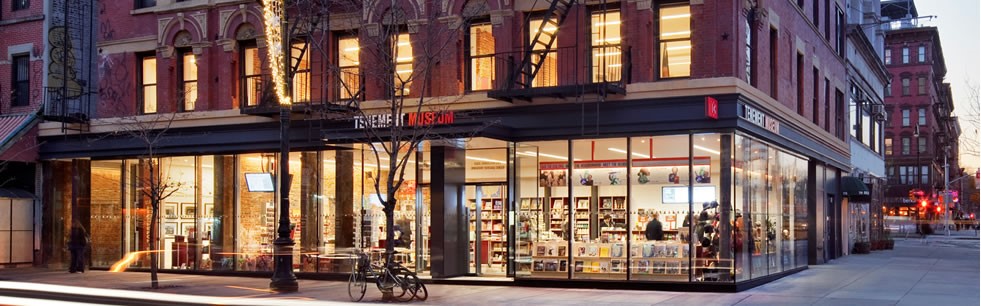
Next, it was off to the Lower East Side, neighborhoods full of history as they were occupied by successive waves of immigrants who made the area their home, Germans then Russian Jews and Eastern Europeans, Italians, Portuguese, Hispanics, Chinese, etc.  The place to start is the Lower East Side Tenement Museum where a former tenement, occupied for over a century until the 1880s, has been restored to represent different stages of its use.  The building itself is only accessible through guided tours, and this is the only downside.  In order to see everything, you have to take every tour. However, we resolved to make it a point to return on every future trip to New York in order to do just that. We took the longest tour, the shopkeepers tour. It started in the lower floor saloon and apartments that belonged to a German family, and we learned about the family, their German neighbors, and their contributions to American culture.  The tour ended with one of the coolest interactive artifacts displays I’ve ever seen in a museum.  The gift shop is a must-see as well. I wanted to read practically every book on sale, and there were hundreds of titles.  Be sure to check out their website before going. They have walking tours of the neighborhood, special events, and extended hours on Thursdays.  You can purchase tickets in advance and get discounts for booking multiple tours.  (Also, teachers get a tour discount – which we only learned about afterwards.)

 
A few blocks away is a quiet little museum that is well worth a visit, the Museum at Eldridge.  It is a beautifully restored Orthodox synagogue built by Russian Jews in the late 1800s. It is still used for services by its small congregation, but it is open for tours conducted by volunteers during the week. The interior is beautiful, and David, our guide, was full of information.  I highly recommend seeing it if you get the chance.

 
And while you’re in the area, take some time to just walk around and think about the changes the area has seen.  It is a huge melting pot of ethnicities, as Chinatown and Little Italy are literally side by side.  Now, it’s the hottest area of Manhattan, and we were told that it’s the hippest place to be, especially at night, and those small 350 square feet tenement apartments that housed families seeking the American dream now might rent for as much $4000 a month.  While you’re exploring, we highly recommend meals at the oldest dim sum restaurant in NYC, the Nom Wah Tea Parlor (cash or Amex only), and have a nosh, a meal, and an egg cream at Russ & Daughters, another iconic deli over a century old, albeit the cafĂ© in this neighborhood is only a couple of years old.  There’s just too much to do.  We’re already planning future trips!