My wife and I made a quick trip to New York City during winter break, and since it was February, we decided to make it as indoors as possible, concentrating on museum visits. We got a good deal on a hotel on 7th Avenue, near Times Square and conveniently located near several subway stops. After checking in, we headed to the legendary Katz's Deli, a NYC institution since 1888, made famous in television shows and movies like When Harry Met Sally. It’s an icon. You have to go there once. Honestly, I’ve had better - and worse - deli food, but it’s an experience. Like everything else in the city, it’s claustrophobically crowded, and they use a unique, maybe confusing, system that you have to puzzle through. You’re given a ticket upon entry and you line up at a carving station to order your sandwich. If you want sides and drinks, you line up at other stations. Your orders get marked on your ticket, and then you try to find a table, elbow to elbow with other patrons. Cash only. I don’t know that we’ll ever go back, but we can say that we’ve done it.
Showing posts with label #food. Show all posts
Wednesday, May 18, 2016
Short Time in the Big Apple: Lower East Side
By Jeff Burns
My wife and I made a quick trip to New York City during winter break, and since it was February, we decided to make it as indoors as possible, concentrating on museum visits. We got a good deal on a hotel on 7th Avenue, near Times Square and conveniently located near several subway stops. After checking in, we headed to the legendary Katz's Deli, a NYC institution since 1888, made famous in television shows and movies like When Harry Met Sally. It’s an icon. You have to go there once. Honestly, I’ve had better - and worse - deli food, but it’s an experience. Like everything else in the city, it’s claustrophobically crowded, and they use a unique, maybe confusing, system that you have to puzzle through. You’re given a ticket upon entry and you line up at a carving station to order your sandwich. If you want sides and drinks, you line up at other stations. Your orders get marked on your ticket, and then you try to find a table, elbow to elbow with other patrons. Cash only. I don’t know that we’ll ever go back, but we can say that we’ve done it.
Our
first museum was the 9/11 Memorial and Museum. It was kind of a conscious decision to do this first,
because we knew that it would make a powerful impact, and it certainly
does. The only place that I can compare
it to in terms of the somber tone and mood is the United States Holocaust
Museum. Be prepared. Every exhibit is incredibly effective at
being affective. The attacks and their
aftermath are personalized by the informative and tastefuly done displays. Lines can be long, but you can purchase
advance tickets online.
Next,
it was off to the Lower East Side, neighborhoods full of history as they were
occupied by successive waves of immigrants who made the area their home,
Germans then Russian Jews and Eastern Europeans, Italians, Portuguese,
Hispanics, Chinese, etc. The place to
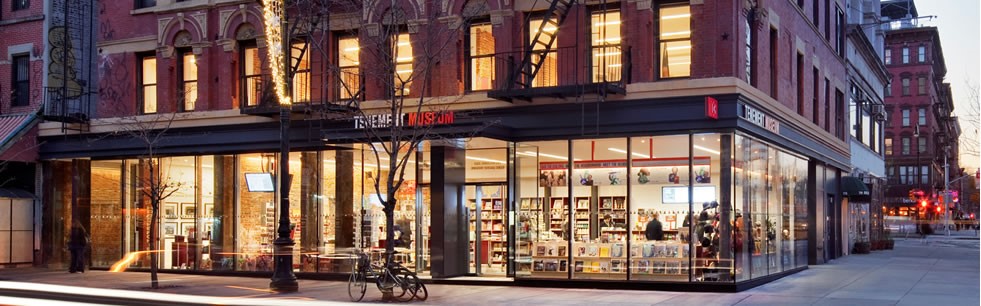
start is the Lower East Side Tenement Museum where a former tenement, occupied for over a century until
the 1880s, has been restored to represent different stages of its use. The building itself is only accessible
through guided tours, and this is the only downside. In order to see everything, you have to take
every tour. However, we resolved to make it a point to return on every future
trip to New York in order to do just that. We took the longest tour, the
shopkeepers tour. It started in the lower floor saloon and apartments that
belonged to a German family, and we learned about the family, their German
neighbors, and their contributions to American culture. The tour ended with one of the coolest
interactive artifacts displays I’ve ever seen in a museum. The gift shop is a must-see as well. I wanted
to read practically every book on sale, and there were hundreds of titles. Be sure to check out their website before
going. They have walking tours of the neighborhood, special events, and
extended hours on Thursdays. You can
purchase tickets in advance and get discounts for booking multiple tours. (Also, teachers get a tour discount – which
we only learned about afterwards.)
A
few blocks away is a quiet little museum that is well worth a visit, the Museum
at Eldridge. It is a beautifully
restored Orthodox synagogue built by Russian Jews in the late 1800s. It is still
used for services by its small congregation, but it is open for tours conducted
by volunteers during the week. The interior is beautiful, and David, our guide,
was full of information. I highly
recommend seeing it if you get the chance.
And
while you’re in the area, take some time to just walk around and think about
the changes the area has seen. It is a
huge melting pot of ethnicities, as Chinatown and Little Italy are literally
side by side. Now, it’s the hottest area
of Manhattan, and we were told that it’s the hippest place to be, especially at
night, and those small 350 square feet tenement apartments that housed families
seeking the American dream now might rent for as much $4000 a month. While you’re exploring, we highly recommend
meals at the oldest dim sum restaurant in NYC, the Nom Wah Tea Parlor (cash or Amex only),
and have a nosh, a meal, and an egg cream at Russ & Daughters, another iconic deli over a century old, albeit the café
in this neighborhood is only a couple of years old. There’s just too much to do. We’re already planning future trips!
My wife and I made a quick trip to New York City during winter break, and since it was February, we decided to make it as indoors as possible, concentrating on museum visits. We got a good deal on a hotel on 7th Avenue, near Times Square and conveniently located near several subway stops. After checking in, we headed to the legendary Katz's Deli, a NYC institution since 1888, made famous in television shows and movies like When Harry Met Sally. It’s an icon. You have to go there once. Honestly, I’ve had better - and worse - deli food, but it’s an experience. Like everything else in the city, it’s claustrophobically crowded, and they use a unique, maybe confusing, system that you have to puzzle through. You’re given a ticket upon entry and you line up at a carving station to order your sandwich. If you want sides and drinks, you line up at other stations. Your orders get marked on your ticket, and then you try to find a table, elbow to elbow with other patrons. Cash only. I don’t know that we’ll ever go back, but we can say that we’ve done it.
Tuesday, December 1, 2015
Enjoy History and More in Gettysburg
By: Traci Kerns
(Traci Kerns is a full time History Teacher, part time world traveler, aficionado of delicious food and good living.)
| A view from the summit of Little Round Top |
![]() |
| Devil's Den |
![]() |
| Door to Jenny Wade House |
In addition to your visit to the
park, a ghost tour is a delightful distraction to add to your itinerary. There are plenty to choose from along
Steinwehr Avenue, which is also where you will find most of your tourist
shopping. A favorite stop for ghost tours
is the Jennie
Wade House, home of the only civilian killed during the battle, as she
kneaded dough in her kitchen for her family and wounded soldiers. Another interesting battle artifact can be
found at Mr. G’s Ice Cream parlor. Here,
you can sit at a “witness tree” table made from a sycamore that stood along
Baltimore Street, which President Lincoln passed on his way to deliver his
famous address. Outside of the shop are
two additional living witness trees.
![]() |
| Dobbin House Tavern |
With a variety of places to stay,
from dreamy bed and breakfasts, large family hotels with pools and the elegant
Gettysburg Hotel on the square, Gettysburg is a popular four- season
destination and is definitely on my list to return to in the future. It is a quaint location, perfect for spending
time wandering the battlefield, imbibing local ciders or driving the
surrounding countryside, dotted with covered bridges and breathtaking vistas
across wooded hills. Although the small town
of Gettysburg is best known for the tragic battle that made it infamous, there
is much more to this charming, bygone region that is worth seeking out.
Wednesday, July 15, 2015
Tasty Tour: Tampa (Ybor City, actually)
By Jeff Burns
One hundred fifty years ago, there wasn’t much to
Tampa Florida. It consisted of a few
hundred people looking to scratch out a living the best way they could. However, in the late 1800s, things started
coming together. Henry Plant, an eastern
railroad magnate saw the potential Tampa had:
a natural harbor and nice climate, so he built railroads connecting the
region to the north. Then, a visionary
named Vincente Martinez-Ybor saw the potential and built the city on
cigars. That’s the story I learned from
taking a history and food walking tour of Ybor City, the core of historic
Tampa. The tour is one of several tours
offered by Ybor City Food Tours
.
Vincente
Martinez-Ybor was a Cuban cigar maker, born in Spain, who purchased swamp land
and transformed it into the world’s largest cigar company and a thriving community that may well have
been the greatest example ever of an American melting pot. Workers and came from around the world and
lived, worked, and socialized in Ybor City. Many think of Ybor City as a Cuban
enclave, but there were not only Cubans, but also Spaniards, Italians,
Sicilians, Germans, Romanians, and Americans, black and white, among others who
built the city.
Our
tour was the Original Ybor City Food Tour, billed as a two-hour tour that
lasted closer to three. Along with
learning the history of Ybor City, we enjoyed special treats in various
restaurants along the route. It’s kind
of like a progressive dinner. We started
with chicken wings at the Tampa Bay Brewing Company, then a huge slice of
cheese pizza at New York, New York Pizzeria, a Cuban sandwich (voted best Cuban
from Miami to Tampa multiple times – and it has my vote), black beans and rice
at Gaspar’s Grotto, and key lime pie from Green Iguana and Cuban coffee at
Nicahabana Cigars, one of a dozen or so traditional hand-rolled cigar shops
still operating in Ybor City. Like most
of the cigar shops, Nicahabana offers Cuban coffee and espressos. (Unfortunately, their machine was out of
order when we were there, so no coffee.) The food was fantastic at every stop,
and we were all more than satisfied.
Sunday, August 24, 2014
Food Destinations: Agricultural and Industrial History
By Nina Kendall
Food
tells a story. It is a source of economic revenue, and a reflection of
geography, industry, and tradition in an area. You can learn about food history
from books, by conducting oral history interviews, and through visits to
museums and corporations. Food tourism
can be interesting. It is a chance to view a unique slice of history. Here are
a few sites to consider:

The
World of Coca-Cola
is a museum that documents the development of Coca-Cola and the growth of the
corporation. Here you can learn about
the strategy of Asa Candler in marketing his product, and see how the
corporation has customized its brand for different cultures. In this museum,
you can watch a movie, sample drinks from around the world, and see how
Coca-Cola is produced. It is a lot of fun for the whole family and ends in the
tasting room.
Food
tells a story. It is a source of economic revenue, and a reflection of
geography, industry, and tradition in an area. You can learn about food history
from books, by conducting oral history interviews, and through visits to
museums and corporations. Food tourism
can be interesting. It is a chance to view a unique slice of history. Here are
a few sites to consider:
The
World of Coca-Cola
is a museum that documents the development of Coca-Cola and the growth of the
corporation. Here you can learn about
the strategy of Asa Candler in marketing his product, and see how the
corporation has customized its brand for different cultures. In this museum,
you can watch a movie, sample drinks from around the world, and see how
Coca-Cola is produced. It is a lot of fun for the whole family and ends in the
tasting room.
Vidalia
Onion Museum documents the history of this unique
product. This onion has transformed a
region and made a lasting impact of the food world. The Vidalia Onion Festival has
celebrated the impact of this industry for decades. When traveling through South Georgia you
should check it out.
The
SPAM
Museum is in St. Austin, Minnesota. This large museum documents the
history of this canned meat. Visit this free museum to learn about the
varieties of SPAM and try your hand at SPAM trivia. Perhaps this will be a stop
on your next road trip.
Hershey’s Chocolate
World is in Hershey,
Pennsylvania. Here at the home of the Hershey Company you can enjoy sweet
history. You can learn about how
chocolate is made, sample a few varieties, and create your own candy bar.
Hershey’s Chocolate World along with other local attractions makes this town a
destination.
The
Blue
Bell Creamery tour is both interesting and delicious.
You can arraign for a tour of the factory or just visit the Country Store and
Parlor. With locations in Alabama, Texas,
and Oklahoma, you have a number of chances to learn about how ice cream is
made. What a sweet day!
You
can learn about the agricultural industry of Hawaii at Dole Plantation
in Wahiawa on the island of Oahu.
Enjoy a pineapple cutting exhibition or explore the maze and planation gardens.
No
matter your destination enjoy a little food history on the way. Learn about the
economic impact of food and agricultural industries. See how unique products
have shaped this land. It will certainly be a tasty adventure.
Sunday, August 10, 2014
Staycation: Exploring the Changes in the Local Food Landscape
By Jeff Burns
First
up: Villains Wicked Heroes. Every menu item carries the name of
a pop culture villain, from Lucy Van Pelt (Cajun boiled peanuts appetizer of
course) to Bluto (a spinach salad) and Goldfinger (a hot brown sandwich
hero). The menu is a lot of fun, and the
food is even better. I enjoyed my
favorite Bond villain, Oddjob, and my wife had a Mumm-Ra.
Second,
we visited Sobban- Korean Southern Diner in Decatur, the brainchild of a couple
with another very successful restaurant, Heirloom
Barbecue. He’s southern, she’s south
Korean, and they discovered that their cultures share many things in common,
like a love for barbecue, pork, and pickles.
At Sobban, they’ve masterfully blended the two into many delicious
dishes. We started with a kimchi deviled
egg and okara hushpuppies with kimchi
remoulade as appetizers. (Not
okra, okara is a soy pulp, a byproduct of making tofu) Our entrees were a
bulgogi beef burger and a fried bologna sandwich – you guessed it, with kimchi
– featuring bologna made in house. It
was all great.

Finally, we returned to Buford Highway, the most eclectic area of Atlanta. Within sight at any time might be a Korean, an Indian, a Peruvian, a Mexican, and a Vietnamese restaurant. We went to the Oriental Pearl, a Chinese dim sum restaurant. We’ve eaten dim sum at other restaurants, but this was first time at Oriental Pearl. If you’re not familiar with dim sum, it’s a Cantonese style of cooking bite sized servings on small plates, and servers wheel carts loaded with the offerings around the room. You tell them what you want, they mark your bill, and the cashier tallies your cost by adding up the plates. Foods include lots of dumplings and buns stuffed with shrimp, pork, tofu, vegetables, or some combination thereof, squid, chicken feet, and various vegetables. Most dishes are steamed or fried. It was a great experience, and I think we’ve found a new favorite dim sum place.
“The
best laid plans….” Our plan to have one
lunch per week in a new restaurant or to try a new ethnic cuisine was a good
plan, but life got in the way, and we haven’t quite made it each week. However, we still managed to add some new
favorites to our list. Here are a few find from our hunt for the food of a modern land.
First
up: Villains Wicked Heroes. Every menu item carries the name of
a pop culture villain, from Lucy Van Pelt (Cajun boiled peanuts appetizer of
course) to Bluto (a spinach salad) and Goldfinger (a hot brown sandwich
hero). The menu is a lot of fun, and the
food is even better. I enjoyed my
favorite Bond villain, Oddjob, and my wife had a Mumm-Ra.
Second,
we visited Sobban- Korean Southern Diner in Decatur, the brainchild of a couple
with another very successful restaurant, Heirloom
Barbecue. He’s southern, she’s south
Korean, and they discovered that their cultures share many things in common,
like a love for barbecue, pork, and pickles.
At Sobban, they’ve masterfully blended the two into many delicious
dishes. We started with a kimchi deviled
egg and okara hushpuppies with kimchi
remoulade as appetizers. (Not
okra, okara is a soy pulp, a byproduct of making tofu) Our entrees were a
bulgogi beef burger and a fried bologna sandwich – you guessed it, with kimchi
– featuring bologna made in house. It
was all great. 
Finally, we returned to Buford Highway, the most eclectic area of Atlanta. Within sight at any time might be a Korean, an Indian, a Peruvian, a Mexican, and a Vietnamese restaurant. We went to the Oriental Pearl, a Chinese dim sum restaurant. We’ve eaten dim sum at other restaurants, but this was first time at Oriental Pearl. If you’re not familiar with dim sum, it’s a Cantonese style of cooking bite sized servings on small plates, and servers wheel carts loaded with the offerings around the room. You tell them what you want, they mark your bill, and the cashier tallies your cost by adding up the plates. Foods include lots of dumplings and buns stuffed with shrimp, pork, tofu, vegetables, or some combination thereof, squid, chicken feet, and various vegetables. Most dishes are steamed or fried. It was a great experience, and I think we’ve found a new favorite dim sum place.
Saturday, January 25, 2014
Great Getaways in Georgia: Nacoochee Valley
Looking for a great getaway? Want something that appeals to your family or friends? The Nacoochee Valley has the answer for your all of your needs. Whether a weekend or a day trip you have plenty of choices.This valley is home to some unique history in the state of Georgia. Here you can find the site of America's first gold rush, the home of the Cabbage Patch Kids, and a hidden alpine village. You can pan for gold in Dahlonega and celebrate Oktoberfest in Helen. This area does a good job at combining history with tourism.
Helen is an alpine village in the foothills of Georgia. It adopted this theme in the late 1960's and is now a slice of Bavaria just a car ride away. Here they celebrate Oktoberfest and Fasching and give you the chance to see, hear, and sample German culture. You can have brotchen at Hofer's or wurst at the Bodensee all before walking to the festhalle.
Cleveland is home to the Cabbage Patch Kids. This toy is the creation of Xavier Roberts. It was his work that gave this small town a needed economic boost decades ago. Today you can visit the place where every Cabbage Patch Kid is born Babyland General. Here you can learn about the history of these toys and watch a doll be born. It may even be the doll you take home with you. This is a fun place to ignite the imagination of young kids and learn some economic history.In Dahlonega you can find Georgia's gold rush. The exciting period in state history that lead to an influx of immigrants and increased pressure to relocate the Cherokee people. Today you can tour Consolidated Gold Mines and trying panning for gold yourself. Activities that engage the mind and the body. Panning for gold is not as easy as it looks. You can also learn about the history of gold in the region with a tour of the Dahlonega Gold Museum State Historic site. A museum in the center of town that will give you a sense of the impact gold can have on a region.
Still looking for something else to do? Local vineyards and artisans offer tasty options for your enjoyment. You can also enjoy the outdoors with a visit to Unicoi State Park or spend some time tubing in the summer.
No matter what you do get out and enjoy history and let them know the Histocrats sent you.
Subscribe to:
Posts (Atom)