Showing posts with label #JeffBurns. Show all posts

Sunday, August 12, 2018

Two Days at the Beach – And Some Great Museums in Saint Petersburg Florida

By Jeff Burns

The beaches of the Tampa Bay/Clearwater/Saint Petersburg area have drawn throngs of tourists for over a century, but there is much more to enjoy than just great beaches. History and Art lovers have some great museums to visit too!


One of the jewels in Saint Pete for a number of years has been the Dali Museum, opened in 1982. From the Museum website:  “The Dali Museum celebrates the life and work of Salvador Dali (1904-1989) and features works from the artist’s entire career. The collection includes over 2,100 works from every moment and in every medium of his artistic activity, including oil paintings, many original drawings, book illustrations, artists’ books, prints, sculpture, photos, manuscripts and an extensive archive of documents. Founded with the works collected by A. Reynolds and Eleanor Morse, the Museum has made significant additions to its collection over the years.” The collection is amazing, and if you are a Dali aficionado, it is a must-see.  The Dali also attracts other world-class exhibits that complement Dali’s works. 


Perhaps the most unexpected discovery on our most recent trip was The Imagine Museum, a museum dedicated to the medium of art glass. Maybe it doesn’t sound exciting at first, but believe me, you will be blown away (pun, get it?) by what you see.  Incredibly beautiful and provocative works can be found in every gallery, and you will see things that seem impossible.
 

The Tampa Bay History Center is located in downtown Tampa on the beautiful Riverwalk and is well worth your time. There, see the history of the area unfold, from the earliest inhabitants to Spanish exploration to the development of the cigar industry, and much more.


For more about things to do in Tampa, check out our older blog on Ybor City (the start of modern Tampa), and consider the Henry Plant Museum.  The Plant is located in an 1891 hotel, not too far from the Riverwalk and Ybor City areas.  It is now a museum owned by the University of Tampa and dedicated to the Gilded Age, the period when the wealthy flocked to Tampa to vacation, thanks to the work of early Florida railroad magnate Henry Plant.  The hotel was also the headquarters of the American forces as they prepared for the Spanish American War.


Tuesday, February 7, 2017

Charleston: Happy Historic House Hopping!

By Jeff Burns

Charleston South Carolina is full of history, wherever you look.  There is no shortage of historic homes that you can tour.  Sure, on Plantation Road, you can see several plantations, or the remains of plantations. However, I think the real treats are the houses in town.  For most of the plantation owners, plantation life was not suitable for entertaining and socializing, so most planters owned a townhouse as well.  Many of these houses have been carefully preserved, and they comprise a fascinating part of Charleston’s unique architectural history.

If visiting Charleston, your first stop has to be the Visitors Center. Knowledgeable, friendly people are there to answer any questions and to make recommendations, and you can purchase a Heritage Passport that you will need.  For one bargain price, you can get admission to most of the houses and numerous other sites. From the downtown visitors center, go across the street to the Charleston Museum, which bills itself as America’s oldest museum. There you can see Charleston’s story, the natural and cultural history of the South Carolina low country.

Nearby, the museum maintains two outstanding house museums: the Joseph Manigault House and the Heyward-Washington House. The Manigault House was built in 1803 by one of the wealthiest rice-planting families, and it is a terrific example of Federal-style architecture and furnishings. 


The Heyward –Washington House was built by a signer of the Declaration of Independence, and George Washington stayed there for a week during his presidency. It has another famous person connection, as well. It was the childhood home of Sarah Grimke.  Sarah and her sister Angelina were unique in American history.  Born to a prominent slave-owning family, the sisters became two of the most famous abolitionists and women’s rights advocates of their day.


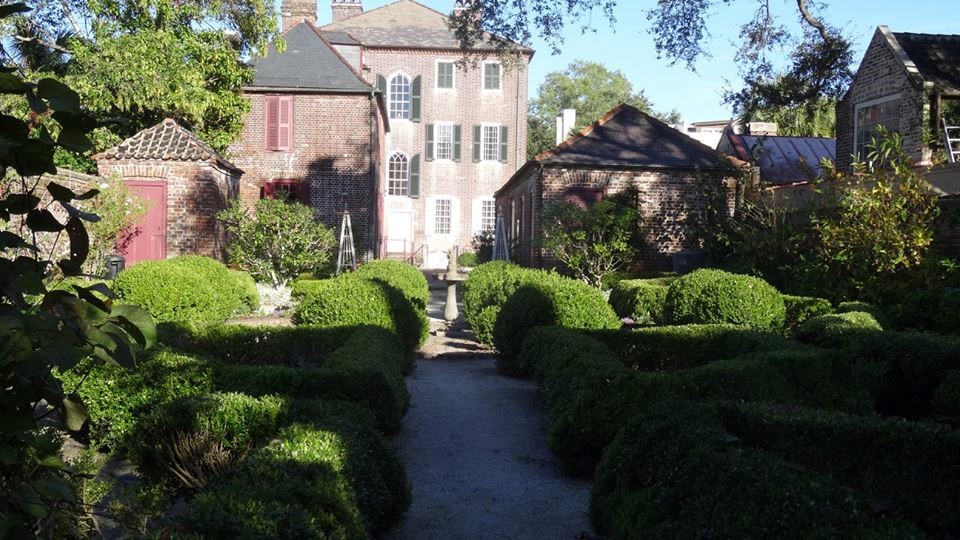
Garden and rear 

I wrote about the Aiken Rhett House in another blog, as an example of preservation instead of restoration
.  The goal  is to show the original house as much as possible. It was built around 1820 and passed down through family members for 145 years.  One of the most interesting aspects of this house tour is the life of the urban slaves who worked here.  The two prominent outbuildings are the kitchen/laundry and the stables/carriage house.  Twelve or fifteen slaves lived and toiled here.


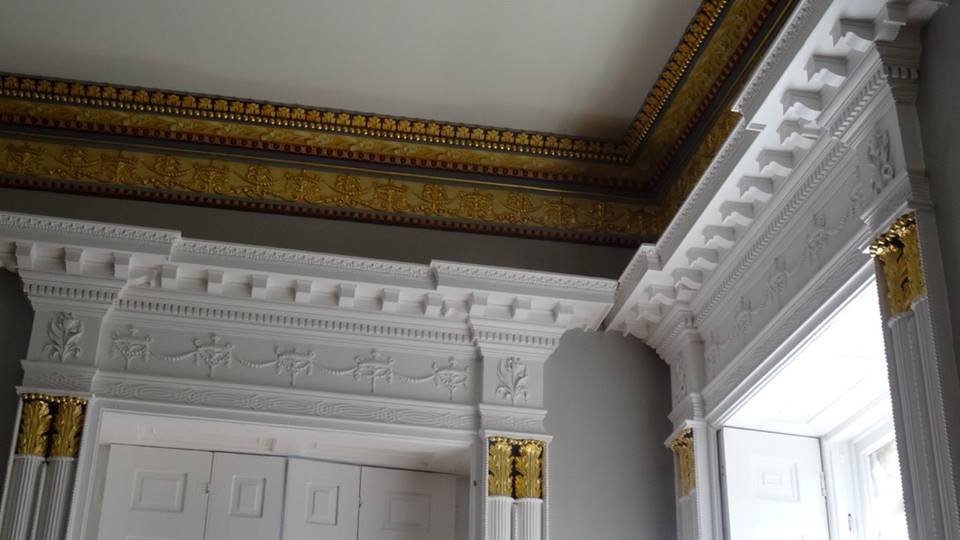
At the opposite end of the spectrum is the Nathaniel Russell House, built in the late 1700s by one of the wealthiest planters and merchants in Charleston. It is beautifully restored to the state of luxury and grandeur that one of America’s wealthiest families of the 18th century enjoyed.


These are just a few of the impressive house museums open to you when you visit Charleston.  Don’t miss them!

Monday, January 23, 2017

Charleston, South Carolina: Telling the Story Through Preservation

By Jeff Burns

If you’re a history lover, Charleston is a great city for you to visit.  In colonial America, it was one of the most prosperous cities, and it was a leading city of the South well into the 19th century.  Of course, Charleston is also where the Civil War began, when South Carolinians opened fire on Fort Sumter, forcing its surrender.  Charlestonians are keenly aware of their history, and they have been for quite a while.  Charlestonians have been actively preserving and commemorating their rich history for well over a century. There’s history everywhere you turn in the city and surrounding area.  

A visitor to Charleston can not only enjoy this history and the gracious hospitality for which Charleston has long been famous, but also enjoy a lesson in historical preservation versus restoration. We’ve all been in beautifully restored homes and buildings where the trustees have gone to great pains to display the house as it might have been in its prime, carefully re-creating carpets, wallpaper and paint, and  furniture.  Some houses are even fortunate enough to have some of the original family possessions to display.  Charleston has a number of these houses, and they are great.  However, Charleston also has a couple of examples of another way of thinking, preservation.

Preservation is the idea that the buildings themselves tell an important story.  The mission of preservationists is to keep the building as close to its original condition as possible and to arrest any deterioration.  Therefore, when you enter a preserved house, you won’t see furniture or fineries.  Instead you’ll see faded paint, torn wallpaper and carpets, exposed boards, and even holes in the wall. 

There are two great preservation sites in Charleston.  First is Drayton Hall, first occupied in the 1750s and passed down through family members until it became a historic site in the 1970s.  It is a rarity on Charleston’s Plantation Road, virtually the only “big” house not destroyed by Union troops during the Civil War.  Legend has that it the occupant at the time, a physician, saved the house by flying yellow flags on the road, alerting Union troops to the smallpox cases being treated there.  Apparently, the plantation had been used to treat small pox among slaves, but historians still haven’t confirmed the story.

Drayton Hall is a can’t-miss sight in Charleston.  We were fortunate to have a guided tour from Mac, a young docent whose excitement about working at Drayton was clearly visible, as he led us from room to room.  Although the house is devoid of furnishings, Mac’s knowledge and stories helped us visualize life on the plantation over the years.  Two features stand out for being very evocative. One is the unmistakable set of fingerprints on one of the bricks in an interior wall, fingerprints probably belonging to a slave boy of 10 or so who was a brickmaker or an apprentice.  Most of the bricks used in Charleston construction were made by slaves on local plantations, of local clay. The second is the little hole cut into the bottom of the attic door, possibly the oldest extant cat-door in the United States, cut so that the cat could have easy access to attic rodents.  

In the city, there is another example of preservation.  Many of the plantation owners had townhouses as well, for entertaining and urban living.  One of these houses now owned by the Charleston Museum is the Aiken–Rhett House, built around 1820 and occupied by the same family for the next 142 years.  Not only do you see the house on the self-guided tour, but you also get a small sense of the life of the urban slaves who lived and worked in the kitchen, laundry, stable, and carriage house out back.


For more pictures, go to the Histocrats’ Facebook page and explore the Charleston album.

Monday, October 10, 2016

Day Trip: Thermopolis, Wyoming

By Jeff Burns

Thermopolis Wyoming is the county seat of Hot Springs County, with a population around 3,000.  The name Thermopolis is Greek for “Hot City”, in reference to the numerous hot springs which have drawn tourists to the area since the 19th century.


The Hot Springs State Park is located in Thermopolis, and you can bathe in thermal mineral pools, with a temperature around 104 degrees (F), for free.  There are also two water concessions in the park, Teepee Pools and Star Plunge, where you can pay to enjoy water slides and other pool fun.  Once out of the pool, be sure to drive around the park and see the Wyoming state buffalo herd.


The Hot Springs County Museum is a must-see, with a great collection of artifacts from the 19th and early 20th century.  One great exhibit consists of a simulated raised wooden sidewalk that takes you down a street of the Old West, allowing you to see inside the storefronts.  Across the street, there are several buildings housing special collections, including an old schoolhouse and a caboose.


Interested in ancient history? Technically, pre-history?  East Thermopolis is home to the Wyoming Dinosaur Center.  Wyoming is rich in fossils of all kinds, and the museum proudly displays many Wyoming finds, as well as specimens from around the world.  You can see the only Archaeopteryx fossil in North America, and you can even go out to an active dig site.

Enjoy a day in Thermopolis, one of the few you places you can relax in a mineral spring and learn about millions of years of history.


Wednesday, September 21, 2016

Day Trip: Billings, Montana

By Jeff Burns

What is there to do in Billings? There are actually a lot of great things to do for a history buff. At about 160,000 in population, Billings is the largest city in Montana and was founded as a railroad town in 1882. However, its history goes back many years before that. Lewis and Clark passed through the area and even named a nearby rock formation Pompey’s Rock, after Sacajawea’s son.  The area has been  occupied by Native Americans for thousands of years, and there are sites near the city that preserve ancient petroglyphs, evidence of their occupation.

During its early days, Billings was a rough and tumble town of the old west, where cowboys, miners, and railroaders blew off steam in saloons and brothels.  The museums of Billings do a great job of telling the story of those eras, prehistoric and bawdy, along with the stories of the homesteaders and ranchers who eventually tamed the west.


We started our visit at the Western Heritage Cultural Center, located in a turn of the 20th century library building.  It’s a good introduction to the area.  Its rotating exhibits cover the natural history and cultural history of the region.  It also serves as the repository of a great collection of Native American oral histories.


From there, it’s a few blocks to the Moss Mansion, built in 1903 by P.V. Moss, a businessman who basically owned Billings.  He had huge a range of money-making interests including mining, railroads, agriculture, and electricity. The mansion now belongs to the city of Billings, and it is preserved as the Moss family lived in it, furnished with their belongings. It is one of the most elaborate and well-preserved house museums I’ve ever visited.  As far as luxury goes, the Moss Mansion is much more luxurious than many would picture in the Old West.


If you fly into Billings, you don’t have to go far to see a great museum.  The Yellowstone County Museum is on the airport property.  Don’t be fooled by the small log cabin you see on the perimeter road.  There is much more to see below.  There are hundreds and hundreds of Indian artifacts as well as an exhibit on one of Billings’ famous residents Calamity Jane, but don’t forget to say hi to the two-headed calf.

In downtown Billings, there are a couple of great stores to explore.  One is Native American Nations.  There you will find a great assortment of Native American crafts and artifacts, and the selection and prices are both much better than any trading posts in the area.  Be prepared to move into the Yesteryears Antique Mall.  It is huge, and there is definitely something for you there.  If you’re really into vintage clothing, check out the Montana Vintage Clothing store, practically next door to Yesteryear.


Monday, July 11, 2016

Ocean Springs Mississippi

By Jeff Burns


French Louisiana started in 1699 when Pierre Le Moyne D’Iberville established Fort Maurepas on the Gulf Coast.  Fort Maurepas became Old Biloxi and New Biloxi soon became the capital of French Louisiana for a couple of decades before the capital was moved to New Orleans.  Fort Maurepas eventually became the town of Ocean Springs.  Look up Ocean Springs, and the word “quaint” is probably not too far removed. Ocean Springs became a resort town, with a great shopping district of small shops, and an artists’ colony with artists setting up shop and practicing painting, sculpting, and ceramics and pottery. Today, it’s a small city of 15,000 or so with a thriving tourist trade as people are drawn by the Gulf Coast beach, camping, and arts.


We camped in the Davis Bayou RV park of the Gulf Shores National Seashore, our inaugural run with our new (to us) pop-up camper. It was a great site, conveniently located, with great amenities.  There is a nice visitors center and plenty of walking and biking trails for exploring the bayou, and it’s within easy access of town and beach.


The must-do activity in town was a revelation to us: the Walter Anderson Museum.  Walter Inglis Anderson was a Gulf Coast artist of the 20th century, whom we had never heard of before, but we very quickly fell in love with his work.  His life was marked by struggles with mental illness, and his art reflects the natural world around him as well as primitive influences from around the world.  He would leave his home and family and row out to Horn Island, a barrier island offshore, for weeks of inspiration. He comes from a family of artists. His mother started the artists’ colony, and his brothers were also accomplished artists.  The whole family worked in paints, sculpture, and ceramics.


If you find yourself as enamored by Anderson’s work as we were, you’ll want to go to Realizations, a store owned by Anderson’s children, which sells prints and gifts featuring his art.  As a bonus, it’s located in the Ocean Springs Visitors Center, a restored train depot. Then, go to Shearwater Pottery, located on Anderson family land and showcasing pottery created by Anderson family members. 


Spend the rest of the time exploring the galleries and boutiques of Washington Avenue. You’re sure to find something you have to take home.  Hungry?  There’s plenty of good food.  We had a great breakfast at Buzzy’s Breakfast Joint, Mediterranean lunch at Phoenicia, and Vietnamese dinner at Pho. Another must-eat in Ocean Springs is Aunt Jenny’s Catfish Restaurant, offering all you can eat shrimp, catfish, and the all the fixins’.  Great food, service, and a great bayou view. 


Bayou View at Aunt Jenny's

Wednesday, May 18, 2016

Short Time in the Big Apple: Lower East Side

By Jeff Burns

My wife and I made a quick trip to New York City during winter break, and since it was February, we decided to make it as indoors as possible, concentrating on museum visits. We got a good deal on a hotel on 7th Avenue, near Times Square and conveniently located near several subway stops.  After checking in, we headed to the legendary Katz's Deli, a NYC institution since 1888, made famous in television shows and movies like When Harry Met Sally It’s an icon.  You have to go there once.  Honestly, I’ve had better  - and worse - deli food, but it’s an experience.  Like everything else in the city, it’s claustrophobically crowded, and they use a unique, maybe confusing, system that you have to puzzle through.  You’re given a ticket upon entry and you line up at a carving station to order your sandwich. If you want sides and drinks, you line up at other stations.  Your orders get marked on your ticket, and then you try to find a table, elbow to elbow with other patrons. Cash only. I don’t know that we’ll ever go back, but we can say that we’ve done it.

 
Our first museum was the 9/11 Memorial and Museum.  It was kind of a conscious decision to do this first, because we knew that it would make a powerful impact, and it certainly does.  The only place that I can compare it to in terms of the somber tone and mood is the United States Holocaust Museum.  Be prepared.  Every exhibit is incredibly effective at being affective.  The attacks and their aftermath are personalized by the informative and tastefuly done displays.  Lines can be long, but you can purchase advance tickets online.

 
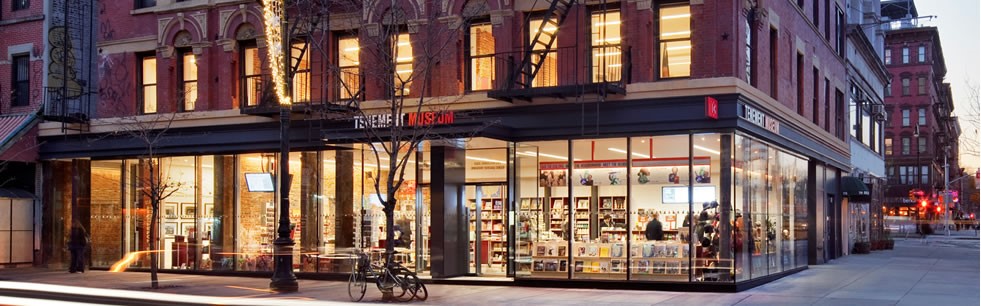
Next, it was off to the Lower East Side, neighborhoods full of history as they were occupied by successive waves of immigrants who made the area their home, Germans then Russian Jews and Eastern Europeans, Italians, Portuguese, Hispanics, Chinese, etc.  The place to start is the Lower East Side Tenement Museum where a former tenement, occupied for over a century until the 1880s, has been restored to represent different stages of its use.  The building itself is only accessible through guided tours, and this is the only downside.  In order to see everything, you have to take every tour. However, we resolved to make it a point to return on every future trip to New York in order to do just that. We took the longest tour, the shopkeepers tour. It started in the lower floor saloon and apartments that belonged to a German family, and we learned about the family, their German neighbors, and their contributions to American culture.  The tour ended with one of the coolest interactive artifacts displays I’ve ever seen in a museum.  The gift shop is a must-see as well. I wanted to read practically every book on sale, and there were hundreds of titles.  Be sure to check out their website before going. They have walking tours of the neighborhood, special events, and extended hours on Thursdays.  You can purchase tickets in advance and get discounts for booking multiple tours.  (Also, teachers get a tour discount – which we only learned about afterwards.)

 
A few blocks away is a quiet little museum that is well worth a visit, the Museum at Eldridge.  It is a beautifully restored Orthodox synagogue built by Russian Jews in the late 1800s. It is still used for services by its small congregation, but it is open for tours conducted by volunteers during the week. The interior is beautiful, and David, our guide, was full of information.  I highly recommend seeing it if you get the chance.

 
And while you’re in the area, take some time to just walk around and think about the changes the area has seen.  It is a huge melting pot of ethnicities, as Chinatown and Little Italy are literally side by side.  Now, it’s the hottest area of Manhattan, and we were told that it’s the hippest place to be, especially at night, and those small 350 square feet tenement apartments that housed families seeking the American dream now might rent for as much $4000 a month.  While you’re exploring, we highly recommend meals at the oldest dim sum restaurant in NYC, the Nom Wah Tea Parlor (cash or Amex only), and have a nosh, a meal, and an egg cream at Russ & Daughters, another iconic deli over a century old, albeit the cafĂ© in this neighborhood is only a couple of years old.  There’s just too much to do.  We’re already planning future trips!